In Wehlensince1156
From a place-name surname in the Eifel to aldermen and growers on the Middle Moselle, the sundial of 1842 and the progenitor Mathias Prüm — and on to the estates whose names are read around the world today.
Prüm is one of the oldest wine-growing names on the Moselle. Its story reaches back to a time when vines had long been grown on the steep slopes of the Middle Moselle — long before they became a legend.
01The earliest traces
The family can be traced in the records back to the 12th century; it first appears in Wehlen in 1156. The name itself derives from the town of Prüm in the Eifel, whose abbey was the spiritual and economic centre of the region from the 8th century and owned vineyards on the Moselle and Ruwer (more on the name).
Whether the early bearers of the name in the Moselle region were already direct ancestors of today's wine family cannot always be proven — the sources for this period are thin.
02On the Moselle
What is certain is that in the 16th and 17th centuries several bearers of the name appear in the records of Bernkastel, Wehlen and Graach — as growers, millers, aldermen and church officers. The family was deeply rooted in the farming and craft culture of the Moselle.
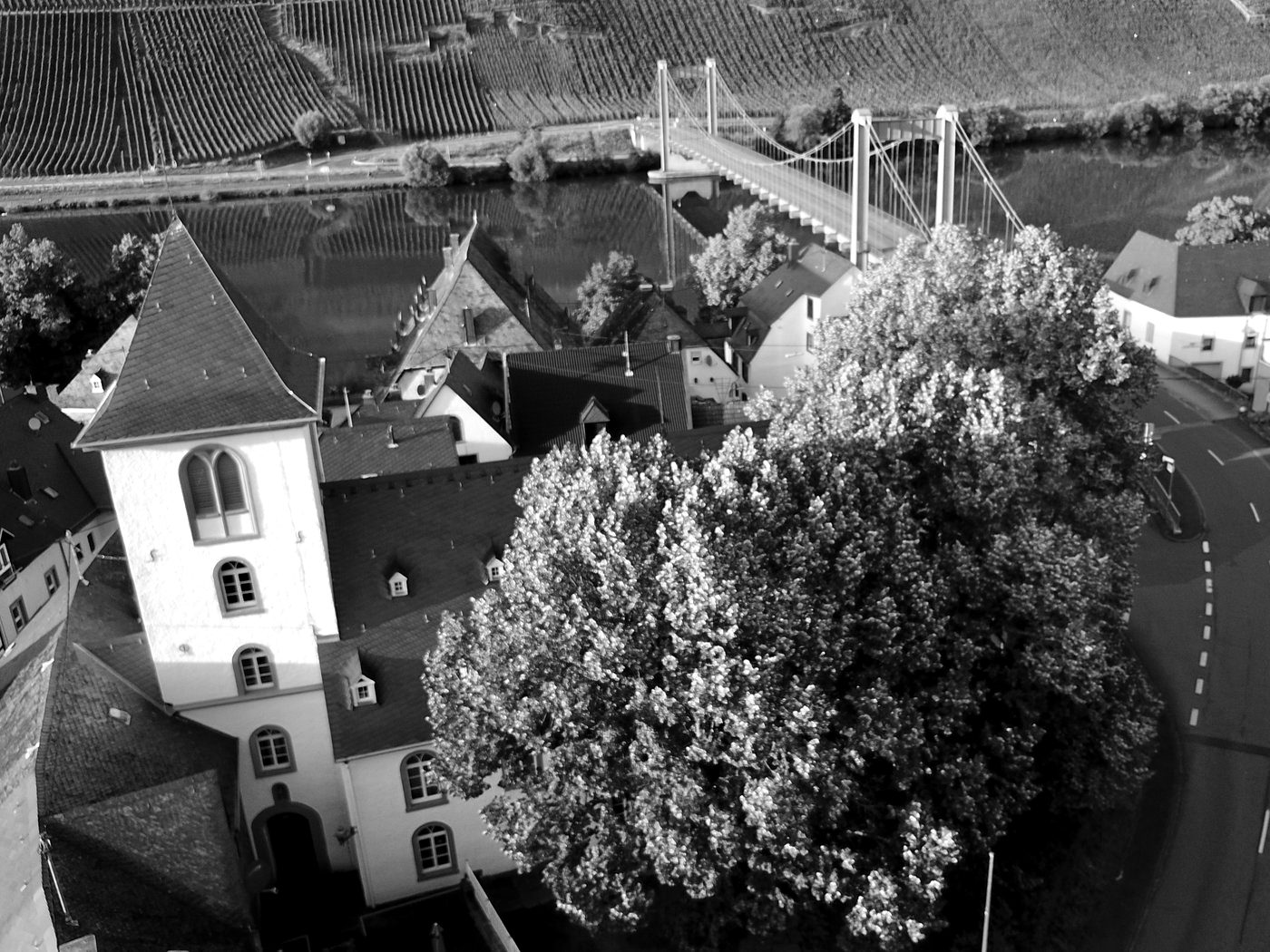
The rise to a wine dynasty began as the Prüms acquired important vineyard sites around Wehlen and Graach. The French period offered one opportunity: on 24 June 1803, the first day of the sale of national property in the canton of Bernkastel, the Wehlen grower Johann Philipp Prüm and three neighbours bought the Elector's house with two wine presses in Wehlen (the records on moselriesling.com).
03The sundial
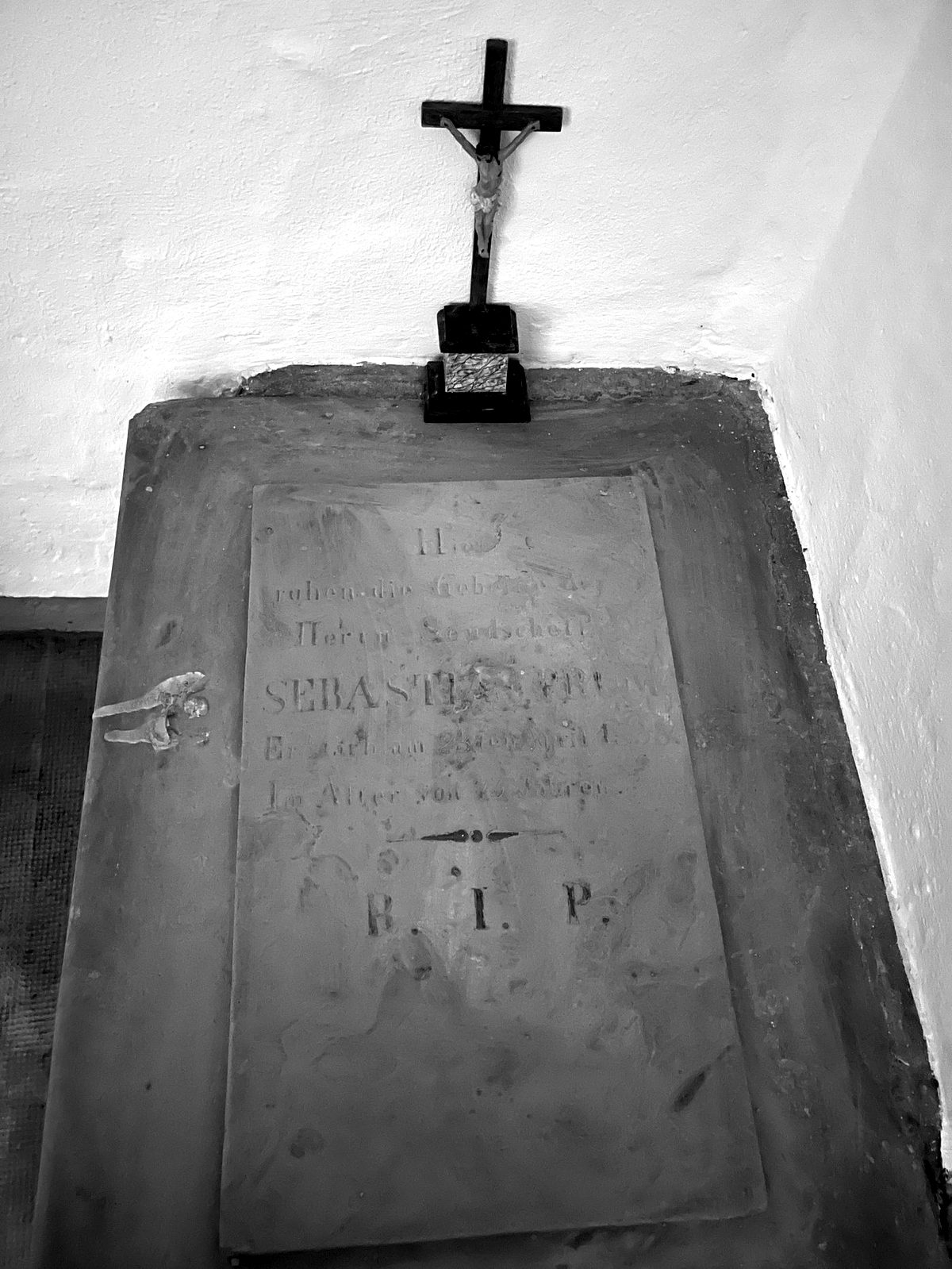
A key date is 1842: Jodocus Prüm (1807–1876) has a sundial set into the slate rock of the already prized steep slope across from Wehlen. It gives the vineyard its name — Wehlener Sonnenuhr — and remains one of the best-known landmarks of German wine.
The life and work of its builder are told on the sister site jodocus.de.
04Mathias Prüm and his six children
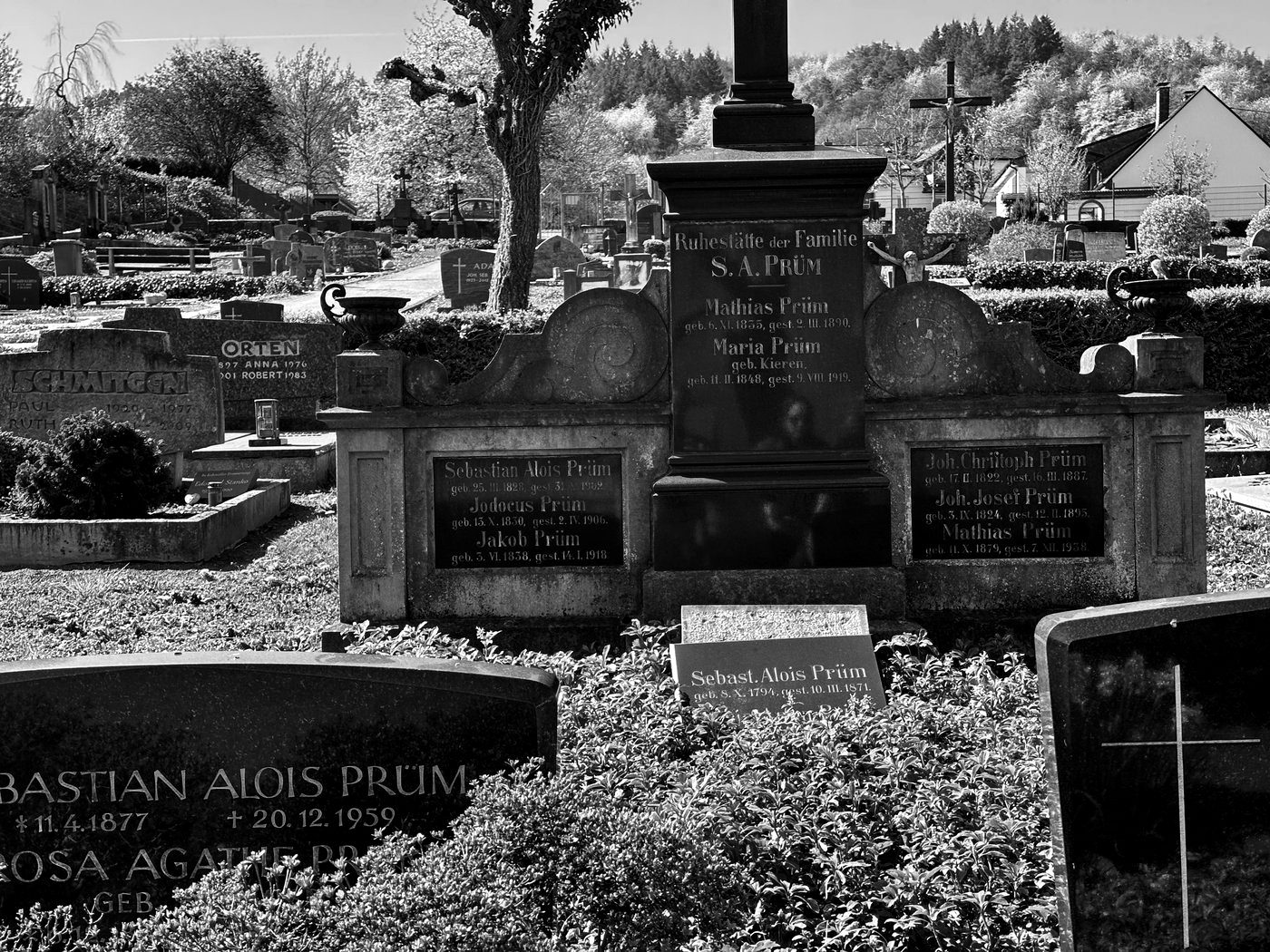
The true progenitor of today's wine dynasty is Mathias Prüm (1819–1900). With his wife Katharina Pauly he had six children, each of whom founded a line of their own — the six branches to which the family traces itself today.
From them came the estates that now belong to the heritage of German wine culture: Joh. Jos. Prüm, S. A. Prüm, Christoffel-Prüm, Studert-Prüm — and, through family ties, Dr. Loosen and Robert Weil.
05The family today
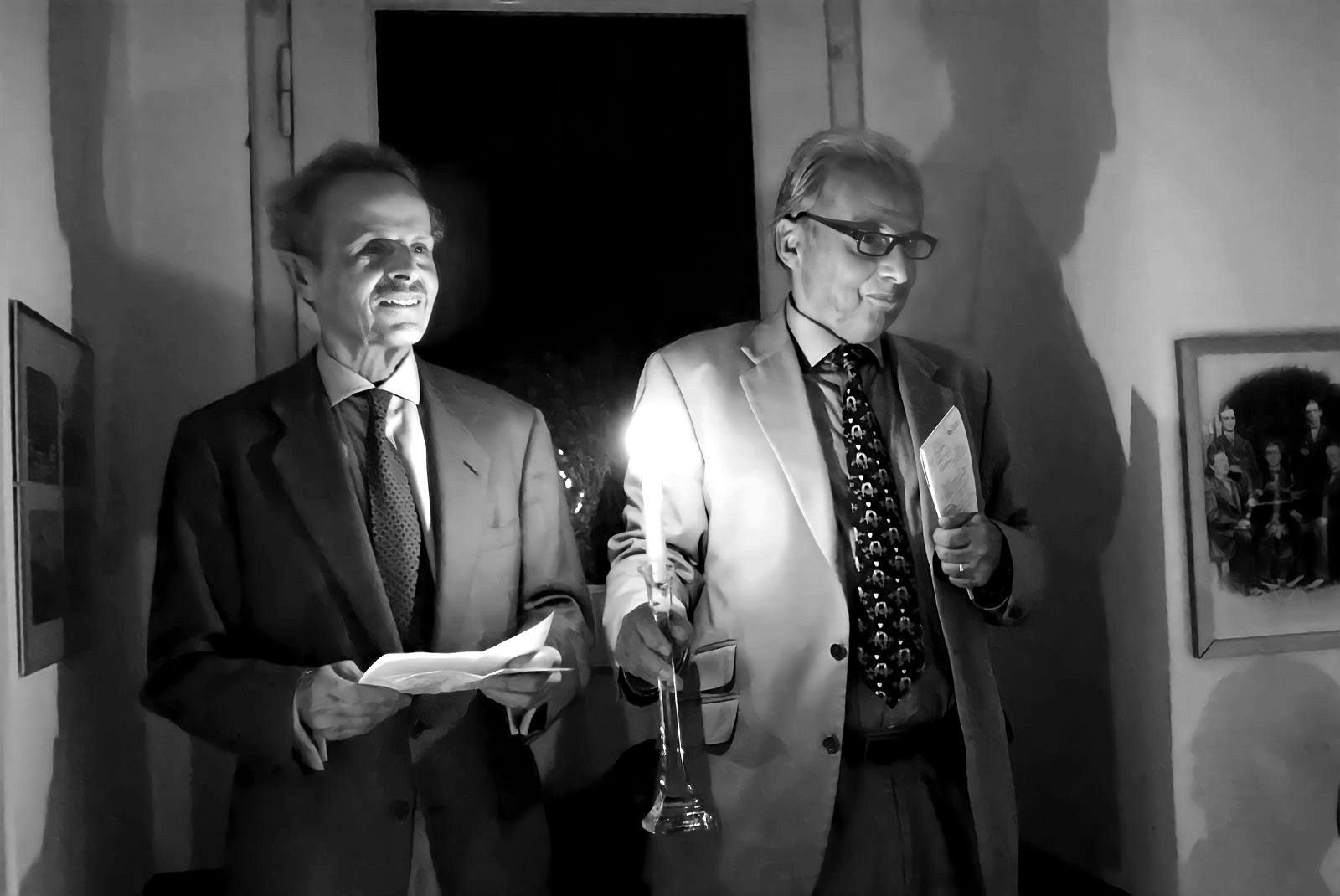
Although the six branches have since divided into many lines, they share a common heritage: wine-growing on the Moselle, Riesling, and the care of a culture that has put down deep roots in the landscape. In 2007 the family established a joint foundation.
06Timeline
- 721Foundation of Prüm Abbey in the Eifel, which gave the family its name.
- 1156First documentary record of the Prüm family in Wehlen.
- 16th/17th c.Prüms as growers, millers and aldermen in Bernkastel, Wehlen and Graach.
- 24 June 1803Johann Philipp Prüm and three neighbours buy the Elector's press house in Wehlen at auction.moselriesling.com
- 1819Birth of Mathias Prüm, progenitor of the six branches.
- 1842Jodocus Prüm sets the Wehlen sundial into the rock.jodocus.de
- 1900Death of Mathias Prüm.
- 1911The Joh. Jos. Prüm and S. A. Prüm estates emerge from the family estate in Wehlen.
- 1949The Moselle's first deliberately made Eiswein — Joh. Jos. Prüm, Wehlener Sonnenuhr.moselriesling.com
- 1969Dr Manfred Prüm takes over Joh. Jos. Prüm.
- 2007Founding of the Prüm family foundation.
Read on at moselriesling.com