River,slate,Riesling
Slate soils, steep river bends and a mild climate: what makes the Middle Moselle one of the world's great Riesling regions — and the home of the Prüm family.
The Moselle rises in the Vosges, crosses Lorraine and Luxembourg and, after some 540 kilometres, joins the Rhine at Koblenz — flowing through one of Europe's oldest cultural landscapes, shaped by wine since Roman times.
01The river
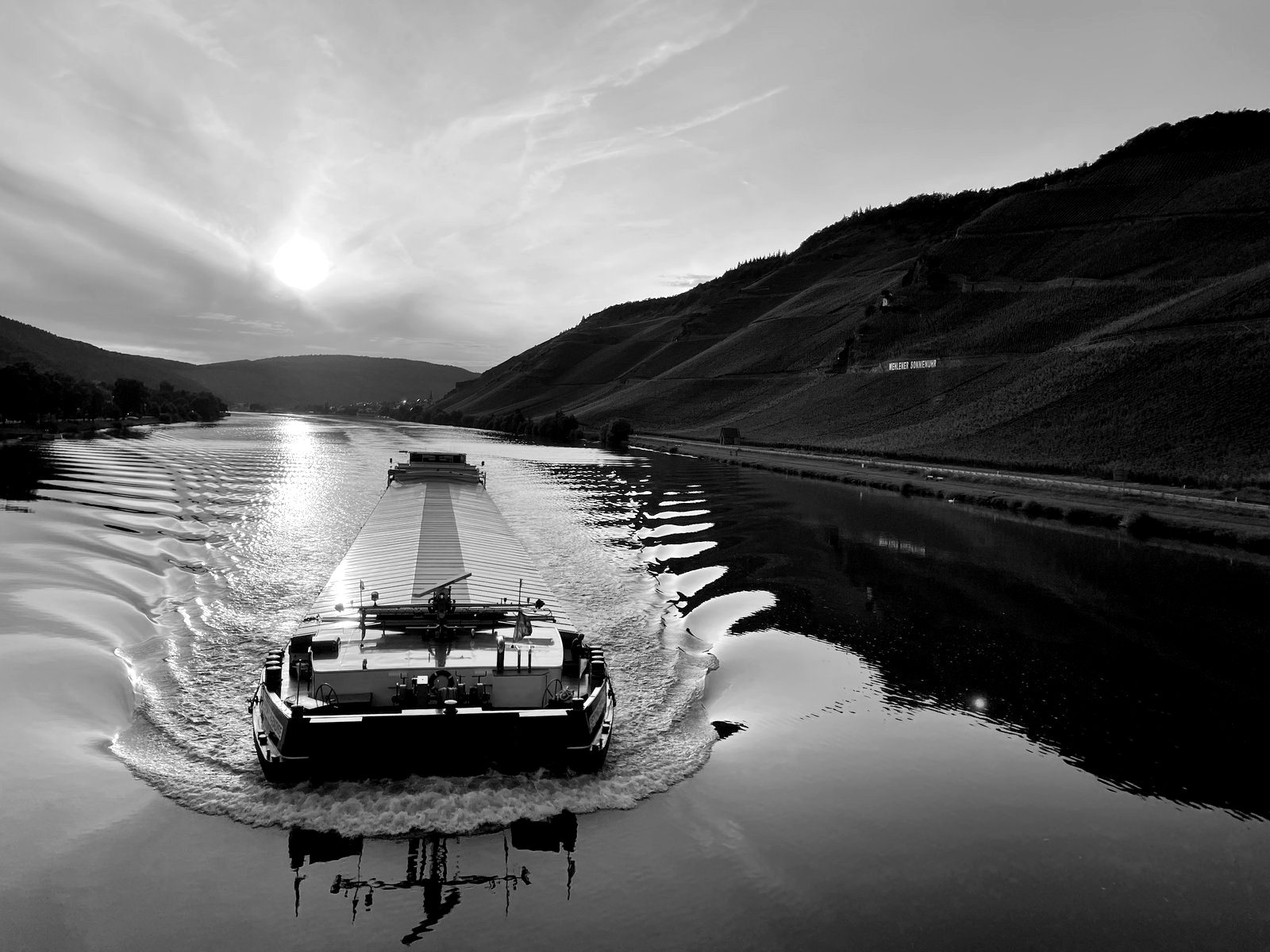
The Moselle winds in tight loops through the Rhenish Slate Mountains. These meanders create the steep outer slopes where Riesling sinks its roots into the slate. No German wine region has as many steep vineyards.
- Length
- c. 540 km
- Source
- Vosges
- Mouth
- Koblenz
- Vineyards
- c. 8,700 ha
- Riesling
- c. 60 %
02Slate and climate
The bedrock is Devonian slate — grey to bluish, weathering into the characteristic stony soils. Slate stores heat, the vines root deeply, and the wines gain their famous mineral note.
The Moselle is one of the most northerly quality wine regions. The river acts as a heat store and softens extremes; the steep slopes, at gradients of 50 to 70 %, make the most of the sun.
03Riesling
The queen of the Moselle is Riesling. On slate and in a cool climate it develops an inimitable balance of acidity, fruit and minerality — with finesse, drinkability and enormous ageing potential. The grape in detail: moselriesling.com (German).
04The Middle Moselle
The heartland is the Middle Moselle between Trittenheim and Pünderich. Here lie the most famous vineyards — among them the Wehlener Sonnenuhr, Graacher Himmelreich, Graacher Domprobst and Bernkasteler Badstube — and here lie Wehlen and Bernkastel.
Read on at moselriesling.com